International Space Law, Treaties and Regulatory Bodies
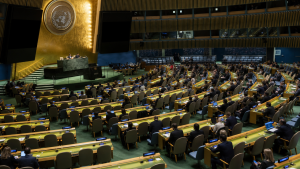
International space law is built on multilateral treaties, UN bodies and evolving regulatory norms that govern activities in outer space. It defines the legal status of outer space, celestial bodies and space objects, while seeking to keep exploration peaceful, cooperative and accountable.
The Core United Nations Space Treaties
The foundation of international space law rests on five major treaties negotiated under the United Nations framework.
- Outer Space Treaty (1967): Prohibits weapons of mass destruction in outer space, limits celestial bodies to peaceful use and has 118 parties.
- Rescue Agreement (1968): Requires the return of astronauts and space objects to launching authorities in emergency situations.
- Liability Convention (1972): Makes launching states absolutely liable for damage caused by space objects on Earth or to aircraft.
- Registration Convention (1975): Requires states to maintain a national registry of space objects and share orbital data with the UN registry.
- Moon Agreement (1979): Describes celestial resources as the common heritage of mankind, but has only 17 parties and 11 signatories.
UN Institutional Framework
Two UN institutions form the core of global space governance: the Committee on the Peaceful Uses of Outer Space (COPUOS) and the United Nations Office for Outer Space Affairs (UNOOSA). They support legal, scientific and policy coordination on peaceful uses of outer space.
- UNOOSA: Heads the UN’s space affairs work and supports implementation of space-related treaties and programs.
- Director of UNOOSA: Ms. Aarti Holla-Maini has served as Director since September 2023.
- COPUOS: Serves as the main UN forum for international cooperation in the peaceful uses of outer space.
- Chair, COPUOS (2026–2027): Professor Teodoro Valente of Italy.
- First Vice Chair, COPUOS: Ambassador Melita Župevc of Slovenia.
- Legal Subcommittee Chair (2026): Pablo Arrocha Olabuenaga of Mexico, with Natanael Pineda Rodríguez of Panama designated to succeed him in 2027.
- Scientific and Technical Subcommittee Chair (2026): Dr. Pakorn Apaphant of Thailand.
- Working Group on Long-term Sustainability: Fatima Al Shamsi of the UAE chairs the Expert Group on Space Situational Awareness.
National Policies and Indian Regulatory Status
While international treaties set broad obligations, states enforce them through domestic laws, licensing systems and regulatory agencies. National approaches vary widely, especially in commercial space activities.
- India: Does not yet have a comprehensive Space Act.
- Indian framework: Space activities are currently governed by executive instruments, including the Indian Space Policy (2023) and the Norms, Guidelines, and Procedures (2024).
- Regulatory significance: These instruments help operationalise India’s obligations and provide a working framework until statutory law is enacted.
- United States: Space regulation is shaped by multiple agencies, including the Federal Aviation Administration (FAA) and the Federal Communications Commission (FCC).
- European Union: The Council of the European Union has been engaged in negotiations on the draft EU Space Act and related dual-use exemptions.
Debris Mitigation and Soft Law Initiatives
Alongside treaties, modern space governance increasingly depends on soft law, voluntary charters and operational guidelines. These are important because space debris, satellite congestion and reentry risks have become central policy concerns.
- ESA Zero Debris Charter: Aims for debris neutrality by 2030.
- Support for the Charter: It had over 210 signatories across 34 countries by January 2026.
- FAA debris rule: The US FAA withdrew its proposed 25-year post-mission orbital debris disposal rule in March 2026.
- Reason for withdrawal: Industry feedback and overlapping regulatory frameworks were cited.
- Artemis Accords: A US-led non-binding framework for space cooperation that expanded to 71 signatories after Türkiye signed on August 31, 2026.
Regulatory Debates in the United States and Europe
Recent policy discussions show how space law is moving beyond treaty language to practical regulation of launches, reentries and satellite disposal. This is especially relevant as commercial space traffic increases.
- NSPM-17: The US National Security Presidential Memorandum 17 was issued on August 20, 2026.
- Launch target: It aims at more than 1,000 annual launches and reentries by 2030.
- FAA proposal: In July 2026, the FAA proposed waiving requirements under 13 environmental laws for certain commercial launches and reentries.
- FCC deorbit rule: The FCC enforces a five-year deorbit mandate for low-Earth orbit satellites launched after September 29, 2024.
- EU Space Act: Negotiations continue on the draft legislation, reflecting the EU’s move toward a more unified space regulatory framework.
Key Prelims Takeaways
- Outer Space Treaty (1967): The central treaty of space law; it has 118 parties.
- Moon Agreement (1979): Has only 17 parties and 11 signatories, making it the least widely accepted of the core treaties.
- Liability Convention (1972): Establishes absolute liability for damage on Earth or to aircraft caused by space objects.
- Registration Convention (1975): Requires national registration and information-sharing on space objects.
- India: Lacks a comprehensive Space Act and relies on the 2023 Space Policy and 2024 Norms, Guidelines, and Procedures.
- COPUOS leadership: Professor Teodoro Valente chairs COPUOS for 2026–2027, with Ambassador Melita Župevc as First Vice Chair.
- Debris governance: The ESA Zero Debris Charter targets debris neutrality by 2030 and had over 210 signatories by January 2026.
| Related | |
|---|---|