The adoption of electric vehicles is rapidly growing worldwide. How do electric vehicles contribute to reducing carbon emissions and what are the key benefits they offer compared to traditional combustion engine vehicles? (UPSC 2023)
Electric vehicles are becoming a major tool in the fight against climate change. By replacing petrol and diesel vehicles, they cut emissions at the point of use and, over time, can sharply reduce total transport-related carbon output as electricity grids become cleaner.
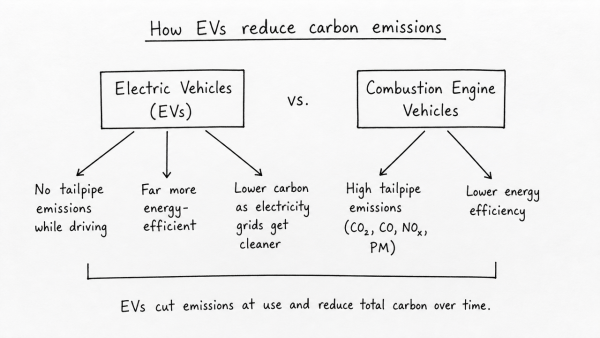
- How EVs reduce carbon emissions
- Battery electric vehicles have no tailpipe emissions, so they do not release carbon dioxide, carbon monoxide, nitrogen oxides or fine particulate matter while driving.
- EVs are far more energy-efficient than combustion engine vehicles. Electric motors convert a much larger share of energy into motion, while petrol and diesel engines waste most energy as heat.
- Though EVs have higher manufacturing emissions, especially from battery production, these are offset during use. On a life-cycle basis, EVs emit far less carbon than comparable internal combustion engine vehicles.
- The benefit grows as electricity generation shifts from coal to solar, wind and other low-carbon sources.
- Key benefits over traditional vehicles
- Lower running costs: EVs have fewer moving parts, need less maintenance and avoid costs such as engine oil changes, spark plugs and exhaust-system repairs.
- Better air quality: They reduce urban air pollution and noise, improving public health and liveability in crowded cities.
- Energy security: EVs reduce dependence on imported oil, which helps countries cut fuel bills and improve trade balance.
- Smart technology: Regenerative braking recovers energy, improving efficiency and range.
Thus, EVs are not only a cleaner transport option but also a more efficient, economical and strategic alternative to combustion engine vehicles. Their full climate value rises further when paired with renewable power and stronger charging infrastructure.
Originally written on
September 4, 2026
and last modified on
September 4, 2026.