Infrared
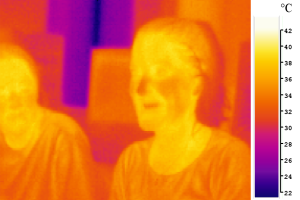
Infrared refers to a segment of the electromagnetic spectrum lying just beyond the longest wavelengths of visible light, typically ranging from about 700 nanometres to 1 millimetre. This region is characterised by its association with radiant heat, as most objects with temperatures above absolute zero emit infrared radiation. Although invisible to the human eye, infrared plays a fundamental role in scientific measurement, remote sensing, communication technologies, medical diagnostics, and everyday consumer devices. Its properties, including thermal emission and variable penetrative capacity, enable diverse applications across fields such as astronomy, defence, industrial automation, and environmental monitoring.
Physical Properties and Spectral Classification
Infrared radiation is divided into several subregions reflecting differences in wavelength, energy, and common usage:
- Near-infrared (NIR): Approximately 0.7–1.4 μm, adjacent to visible light. Common in fibre-optic communication, spectroscopy, and imaging.
- Short-wave infrared (SWIR): Approximately 1.4–3 μm, valued for its ability to penetrate haze and detect moisture contrasts.
- Mid-infrared (MIR): Approximately 3–8 μm, important in thermal imaging and chemical sensing due to strong molecular absorption features.
- Long-wave infrared (LWIR): Approximately 8–15 μm, associated with thermal radiation emitted by objects at ambient temperatures.
- Far-infrared (FIR): Approximately 15–1000 μm, relevant in astronomy for studying cold cosmic structures.
These divisions provide a framework for understanding infrared interactions with matter, including absorption, emission, reflection, and transmission. The wavelengths correspond to vibrational and rotational transitions in molecules, enabling the identification of chemical compositions through infrared spectroscopy.
Discovery and Historical Development
Infrared radiation was discovered in 1800 by William Herschel, who detected elevated temperatures just beyond the red portion of the visible spectrum using a prism and thermometer. This finding demonstrated that light extended beyond visible wavelengths and contributed to the expanding concept of the electromagnetic spectrum.
Subsequent developments included the use of infrared-sensitive materials, advances in thermocouple technology, and twentieth-century innovations in electronic detectors such as lead sulphide, indium antimonide, and microbolometers. Military research during the Second World War accelerated the development of night-vision systems, thermal cameras, and guided missile sensors. In the late twentieth and early twenty-first centuries, compact infrared detectors enabled widespread civilian applications in medicine, environmental observation, consumer electronics, and industrial automation.
Infrared Interaction with Matter
Infrared radiation interacts with materials through heat transfer and molecular excitation. Several key mechanisms explain its behaviour:
- Absorption occurs when molecules absorb infrared energy, causing vibrational or rotational transitions. This forms the basis of infrared spectroscopy.
- Emission results from thermal processes, as objects emit infrared radiation according to their temperature, described by Planck’s law of black-body radiation.
- Reflection varies with surface characteristics; polished metals reflect infrared effectively, while rough or dark surfaces absorb and emit more strongly.
- Transmission depends on the material; for example, glass transmits NIR but blocks much of the MIR, whereas materials such as germanium and sapphire transmit deeper infrared bands.
These interactions determine the suitability of infrared techniques in imaging, sensing, and communication.
Applications in Science and Technology
Infrared technology has become integral to many scientific and industrial fields due to its non-invasive, energy-efficient, and information-rich capabilities.
- Thermal imaging: Used in military surveillance, building inspections, medical diagnostics, and firefighting. Thermal cameras detect emitted infrared radiation to map temperature variations.
- Spectroscopy: Infrared spectrometers identify chemical structures and compositions by analysing molecular absorption patterns. Common in environmental testing, pharmaceuticals, and material science.
- Astronomy: Infrared telescopes observe celestial objects obscured by dust or emitting at low temperatures, such as protostars, brown dwarfs, and galactic structures.
- Remote sensing: Satellites use infrared sensors to monitor vegetation health, sea-surface temperatures, urban heat islands, and atmospheric gases.
- Telecommunication: Fibre-optic systems operate primarily in the near-infrared range, enabling high-speed data transmission with minimal signal loss.
- Industrial automation: Infrared sensors detect presence, proximity, and material properties, supporting robotics, quality control, and safety systems.
- Consumer electronics: Television remote controls, motion sensors, biometric scanners, and short-range data transfer devices use infrared signals.
These diverse applications underscore the versatility and practical value of infrared technology.
Infrared in Medicine and Health Sciences
Infrared devices support diagnostic, therapeutic, and monitoring practices:
- Thermography assists in identifying abnormal temperature patterns associated with inflammation, circulation issues, or musculoskeletal injuries.
- Infrared imaging is utilised during surgical procedures to observe blood flow and tissue viability.
- Photobiomodulation uses controlled infrared wavelengths for therapeutic purposes, such as promoting tissue repair and reducing pain.
- Pulse oximetry employs near-infrared light to measure blood oxygen saturation by analysing absorption differences between haemoglobin states.
Infrared’s non-ionising nature makes it safe for repeated medical use, enhancing its suitability for clinical environments.
Industrial and Environmental Relevance
In industrial contexts, infrared systems provide reliable monitoring and measurement tools:
- Predictive maintenance uses infrared thermography to detect overheating in electrical circuits, bearings, and mechanical components.
- Process control benefits from infrared sensors that monitor moisture content, coating thickness, or product temperature.
- Environmental monitoring relies on infrared atmospheric sensors capable of detecting greenhouse gases, air pollutants, and thermal patterns associated with climate change.
Agriculture also employs infrared imagery to monitor crop stress, soil moisture, and planting conditions, improving resource efficiency.
Advantages of Infrared Technology
Infrared radiation offers substantial practical benefits across technical and scientific domains:
- Non-contact sensing, allowing measurements without disturbing the observed object.
- Operation in darkness or obscured environments, especially for thermal imaging.
- High sensitivity to temperature variations, facilitating precise thermal mapping.
- Energy efficiency, particularly in communication and sensing devices.
- Broad functional range, spanning imaging, spectroscopy, heating, and communication.
These advantages have driven widespread integration of infrared systems into modern technologies.
Limitations and Challenges
Despite its versatility, infrared technology faces certain constraints:
- Atmospheric interference: Water vapour and carbon dioxide absorb specific infrared wavelengths, complicating long-range sensing.
- Material limitations: Common materials such as glass may block significant portions of the infrared spectrum, requiring specialised optics.
- Resolution restrictions: Thermal imaging typically offers lower resolution than visible-light cameras due to detector limitations.
- Cost considerations: High-performance infrared detectors and cooled sensor systems can be expensive.
- Heat radiation overlap: Infrared emission from the environment can introduce noise into sensitive measurements.
Understanding these limitations is essential for designing effective infrared systems.
Infrared in Everyday Life and Emerging Trends
Infrared technology is deeply embedded in contemporary life, from home heating systems and kitchen appliances to wearable health devices and automated lighting. Infrared sensors provide touchless control mechanisms in public spaces, contributing to hygiene and accessibility. The development of microbolometer arrays and low-cost semiconductor materials has broadened access to thermal imaging for domestic and small-business use.
Emerging trends include:
- Advanced driver-assistance systems, using infrared cameras for pedestrian detection.
- Augmented and virtual reality, incorporating infrared depth sensors for spatial mapping.
- Smart infrastructure, employing infrared detectors for traffic flow management and energy efficiency.
- Space exploration, where infrared instruments analyse planetary atmospheres, dust clouds, and surface compositions.
| Related | |
|---|---|