Regulatory Frameworks for Green Finance in India
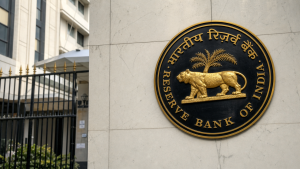
Green finance in India is shaped by a set of regulatory tools that channel money into environmentally sustainable activities while limiting misuse. The framework is mainly driven by the Reserve Bank of India (RBI), the Securities and Exchange Board of India (SEBI), and the Ministry of Finance.
RBI Directions on Climate Finance and Green Deposits
The RBI issued the Reserve Bank of India (Commercial Banks – Climate Finance and Management of Climate Change Risks) Directions, 2025 on November 28, 2025, under Sections 21 and 35A of the Banking Regulation Act, 1949. The directions came into force immediately and require banks to assess climate-related financial risks and integrate them into their credit risk systems.
- Applicability: The directions apply to commercial banks in India, excluding Small Finance Banks (SFBs), Local Area Banks (LABs), Payments Banks (PBs), and Regional Rural Banks (RRBs). Separate directions were issued for Non-Banking Financial Companies (NBFCs).
- Green deposits: These deposits must be denominated in Indian Rupees (INR) and are covered under Deposit Insurance and Credit Guarantee Corporation (DICGC) provisions. They may be offered as cumulative or non-cumulative deposits under regular interest rate norms.
- Use of proceeds: Unallocated green proceeds must be parked in Level-1 High-Quality Liquid Assets (HQLA) for up to one year.
- Excluded uses: Green deposit funds cannot be used for fossil fuels, nuclear power, or hydropower plants larger than 25 MW.
- Disclosure requirement: Regulated entities must have a Board-approved Financing Framework, conduct annual third-party verification of fund allocation, and carry out annual impact assessments.
- Public disclosure: The verification and impact reports must be disclosed on the institution’s official website.
SEBI ESG Debt Securities and Disclosure Norms
SEBI regulates green debt and broader ESG-linked instruments through the capital markets route. On June 5, 2025, it expanded the scope of sustainable debt instruments under the SEBI (Issue and Listing of Non-Convertible Securities) Regulations, 2021, with the aim of aligning Indian capital markets with global ESG reporting practices.
- ESG debt framework: SEBI created a common framework for Environment, Social and Governance (ESG) Debt Securities.
- Consolidated categories: Social bonds, sustainability bonds, and sustainability-linked bonds are brought under a common standard.
- BRSR reporting: Listed entities must file Business Responsibility and Sustainability Reporting (BRSR) data.
- Value-chain disclosures: ESG metrics must also be disclosed for key upstream and downstream value-chain partners.
- Purpose-washing safeguards: SEBI has acted against false, misleading, or incomplete claims about the intended use of bond proceeds.
- ESG rating agencies: Rating agencies assessing ESG profiles must register with SEBI.
India’s Climate Finance Taxonomy
The Department of Economic Affairs, Ministry of Finance, released the Draft Framework of India’s Climate Finance Taxonomy on May 7, 2025, and invited public and expert comments until June 25, 2025. A taxonomy provides a scientific and standardised classification of activities that qualify as sustainable.
- Purpose: The framework is meant to improve capital flow for climate adaptation and mitigation while reducing the risk of mislabelling transition projects.
- National alignment: It supports India’s long-term net-zero target for 2070.
- Sector focus: The taxonomy concentrates on high-emission sectors such as power, mobility, agriculture, iron, steel, and cement.
- Activity baskets: It places projects into two broad baskets: climate supportive activities and climate transition activities.
Sovereign Green Bonds Issuance and Performance
Sovereign Green Bonds (SGrBs) are an important instrument for mobilising funds for public sector climate projects. They are intended to reduce the carbon intensity of the economy while attracting domestic and global investors.
- Cumulative issuance: As noted in the Economic Survey 2025–26, the Government of India issued sovereign green bonds worth ₹15,000 crore in FY26.
- Total since launch: Cumulative issuance from the first launch in FY23 reached ₹72,697 crore.
- Further borrowing: The government planned another ₹15,000 crore of sovereign green bond issuance in H1 FY27.
- Use of proceeds: The money is earmarked for green public infrastructure.
- Banking relevance: Commercial banks may count investments in these sovereign green bonds toward their green allocation requirements.
Comparison of Regulatory Provisions
| Parameter | Reserve Bank of India (RBI) | Securities and Exchange Board of India (SEBI) |
| Primary regulation | Climate Finance Directions, 2025 | Non-Convertible Securities Regulations, 2021 |
| Core target | Commercial banks and NBFCs | Listed corporates and bond issuers |
| Main disclosures | Annual independent impact assessments | BRSR reporting and value-chain metrics |
| Safeguard | Temporary parking in Level-1 HQLA for one year | Action against purpose-washing |
| Statutory basis | Banking Regulation Act, 1949 | SEBI Act, 1992 |
Key Prelims Takeaways
- RBI climate directions: The November 2025 directions replaced the earlier green deposit guidelines of April 11, 2023.
- Exempt entities: SFBs, PBs, RRBs, and LABs are outside the RBI Climate Finance Directions, 2025.
- Use restriction: Green deposit proceeds cannot be used for fossil fuels, nuclear power, or hydropower plants above 25 MW.
- Green deposit standard: Such deposits must be in INR and are covered under DICGC provisions.
- SEBI disclosure regime: Listed entities must comply with BRSR and value-chain reporting requirements.
- Purpose-washing: SEBI treats false, misleading, or incomplete claims about bond proceeds as a regulatory violation.
- Sovereign green bonds: India’s cumulative sovereign green bond issuance from FY23 to FY26 stood at ₹72,697 crore.
| Related | |
|---|---|